When someone searches for a plumber or an electrician or a roofer in their suburb, they are not making a product decision.
They are making a judgment call about whether this particular stranger is going to show up, do the job right, charge what they said they would, and not disappear when something goes wrong.
Most local business websites make this judgment call harder than it needs to be.
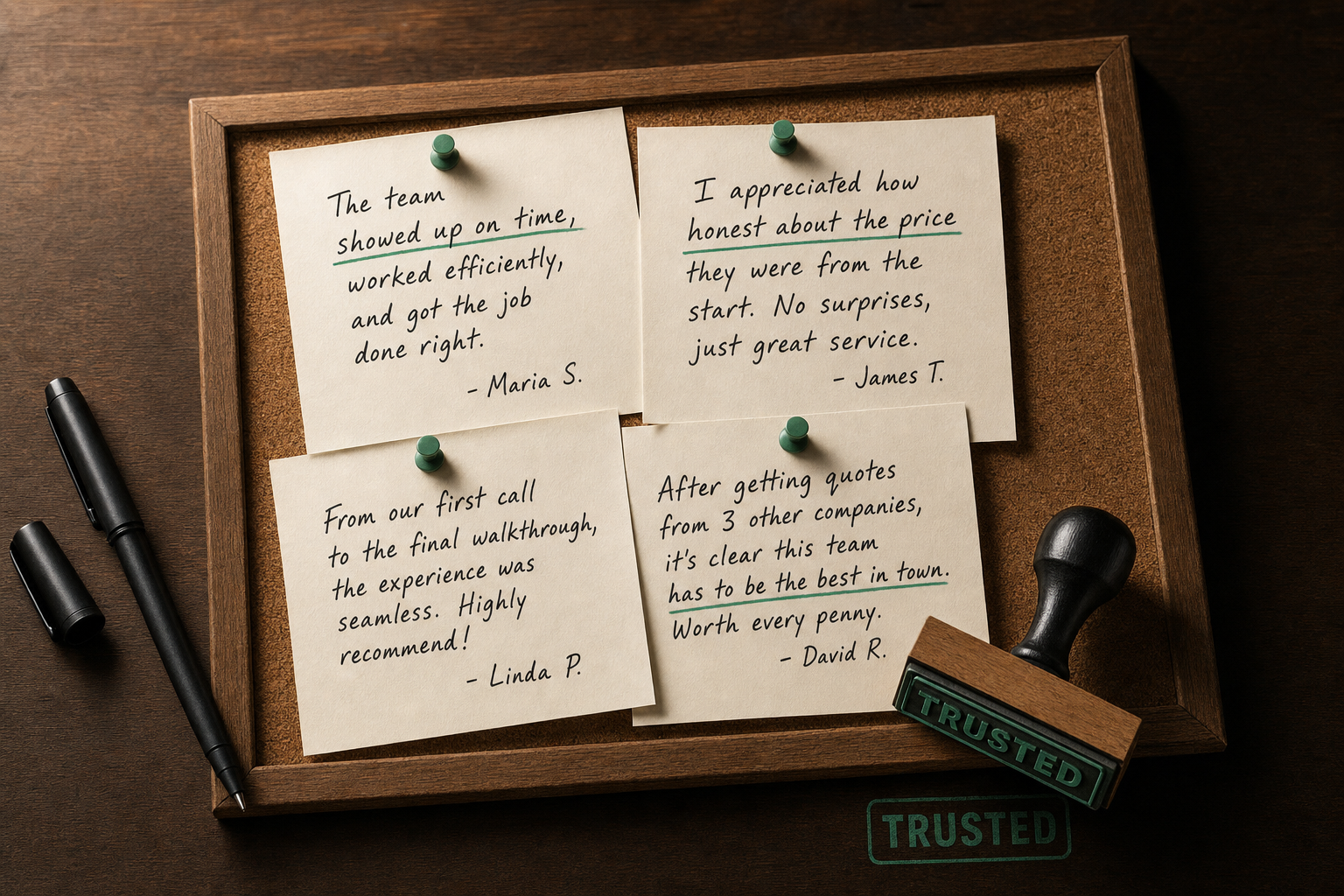
What the customer is actually doing when they visit your website
They already know what you do. They found you because they searched for what you do. The website is not where they decide whether to need a plumber. It’s where they decide whether to call you specifically.
And the questions running in their head at that moment are not about price. They are about risk.
- Are you going to show up when you said you would?
- Is your quote going to blow out once the job is half done?
- Are you actually qualified, or did you just make a website?
- What happens if something goes wrong after the job is finished?
- Has anyone else in this suburb used you before?
Your website probably lists your services. It might have a contact form. Maybe a photo of a van. None of that answers those questions.
The customer is not comparing your price to the next result on the list. They are deciding whether you are safe to let into their house.
What a trust section actually is
Not a “Why Choose Us” section. Those are useless. Every business that has a “Why Choose Us” section says the same things: “quality work”, “professional service”, “competitive pricing”. Nobody reads them. Nobody is reassured by them. They are what you write when you have nothing specific to say.
A real trust section is specific. It names the actual fears. It answers them directly, with proof. It does not hedge. It does not say “we take pride in” anything.
It says: here is what customers like you are usually nervous about. Here is exactly why that is not a problem with us. Here is the proof.
The five questions it needs to answer
Every local business has slight variations, but the fears are usually some version of these five:
Will you actually show up? The last person they called confirmed, then went quiet. Someone else showed up late. Someone cancelled the morning of. This is the single biggest hesitation for most local services customers. If you have a clean record here, say it plainly. If you have reviews that mention it, quote them.
Will the price be what you said? The horror story is universal. Got a quote, job changed in scope, final invoice was double. If your pricing is fixed or if you communicate before going over, that is a specific claim you can make and back up.
Are you qualified to do this? Certifications, licences, years of trade. Not for show. For the customer who is trying to decide whether to trust their roof or their wiring to a stranger.
What happens if something is wrong after? Warranty, guarantee, call-back policy. One sentence. Specific.
Has anyone around here used you before? Local social proof. Not just star rating. A real quote from a real person in a recognisable suburb.
Answer those five questions, with proof, above your contact form. The calls convert differently.
What the tool does
Day 27 of the 30-Day Build Challenge: Local Trust Builder.
Six questions:
- What you do and where you are based
- What your customers are most nervous about
- What proof you have (reviews, years, certs, anything)
- Your most common objection before someone books
- Your best review or testimonial (optional)
The tool builds the full trust section. Headline, five objection cards with proof placement instructions, review spotlight, CTA. It renders as an actual website section preview so you can see it the way a customer would, not in a copy-paste block. Then the HTML is there when you want it.
This is the biggest build of the six. The output is designed to look like something real enough to drop onto a site without restyling. The dark background, the objection grid, the review block at the bottom. It is a section, not a brief.
Try it: Local Trust Builder
Then look at your current website and count how many of those five questions you actually answer. If the answer is zero, you have a conversion problem with an easy fix.