Every time a new tool turns up and starts moving the furniture, a chunk of the industry reacts the same way.
Not with curiosity. Not with experimentation. More like a medieval village spotting a witch near the turnips.
Throw rocks first. Ask questions later. Maybe hold a conference about ethics if the rocks don't work.
You saw it with the internet. You saw it with Canva. Now it's AI. And the panic is always pointed in the wrong direction.
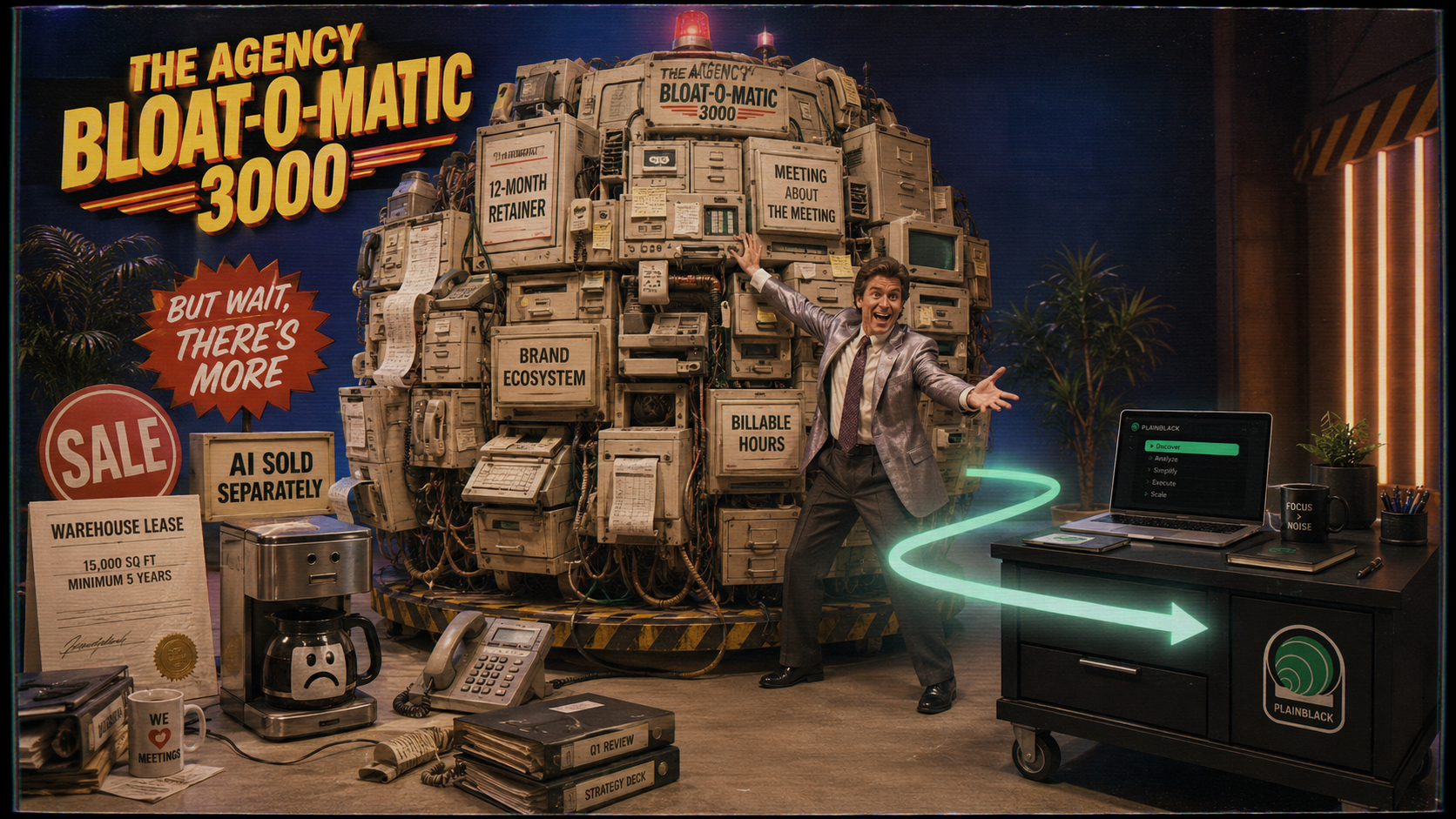
AI isn't killing creativity. It's exposing the bloat.
If you actually love designing websites, writing copy, building brands, and helping a business communicate better, AI is useful. Annoying at times. Weirdly overconfident. A bit like working with an intern who has read the entire internet and understood about a third of it.
But useful. It drafts faster. It builds rough versions before you commit budget. It does the boring middle bit without turning every project into a six-month interpretive dance in a strategy cardigan.
The craft still matters. Taste still matters. Judgement matters more than ever. The tool isn't the problem. What the tool exposes is the problem.
- If your value was mostly hiding behind complexity, AI is going to be rude to you.
- If your pricing only made sense because the client didn't understand what was being done, AI is going to be rude to you.
- If your process needed a small army to produce a landing page that still says unlock your potential, AI is going to be very rude to you. Possibly with a small violin.
That's the uncomfortable bit. The anger isn't really about creativity. It's about a machine that got too big to justify and now has a cheaper, faster neighbour.
The heavy operator can't turn fast.
Picture the agency with the lease, the payroll, the account managers, the project managers, the assistant to the assistant project manager who books meetings to discuss the meeting about the meeting. That setup has to defend the old model. The old model pays for the office aquarium and the very serious coffee machine.
The lean operator can just experiment. Learn the tool, keep the good bits, ditch the nonsense, keep moving. The independent designer pivots on a Tuesday. The big machine holds a planning offsite about whether pivoting aligns with the brand ecosystem.
The real problem
It's not a technology problem. It's a weight problem. The heavier you build the machine, the harder it becomes to turn. And when a new tool arrives, weight matters.
This is part of why we built PlainBlack light. Not because we lack ambition, and not because we want to sit in a cave eating crayons muttering about the industry. Because we don't want to become the thing we keep warning small business owners about: bloated, slow, dependent on confusion, forced to sell big retainers because the machine needs feeding. Staying light enough to move is the whole point.
Maybe they were never your customer.
Here's the bit the rock-throwers miss. The local football club making a slightly cooked AI poster for match day was never going to pay a brand studio five grand for graphics. They weren't your customer. They were just trying to get something done with the tools they had.
So instead of ragging on them from the balcony like Statler and Waldorf with Adobe subscriptions, you could sponsor them. Teach them. Offer a template. Wild idea. Horrifyingly generous. Someone alert the shareholders.
There's enough work. Enough good businesses that need better websites. Enough owners who need clearer offers. Enough people building something real who don't need another agency turning their uncertainty into an invoice. Once you believe enough is enough, you stop defending every old way of working like it was handed down on stone tablets by the patron saint of billable hours.
AI will keep getting better. That's not a moral position, it's just what's happening. The customer still wants the website live, the flyer done, the offer clear, the phone ringing with the right people. They don't care how romantically difficult your process was. Fair enough, too.
If you know what you're actually good at, and you haven't built a business that needs the old model to survive, new technology stops looking like an invading army. It starts looking like a new tool on the bench. Use the useful bit. Ignore the theatre. Keep making good work. And maybe don't build the kind of business that needs to throw rocks every time the world changes.