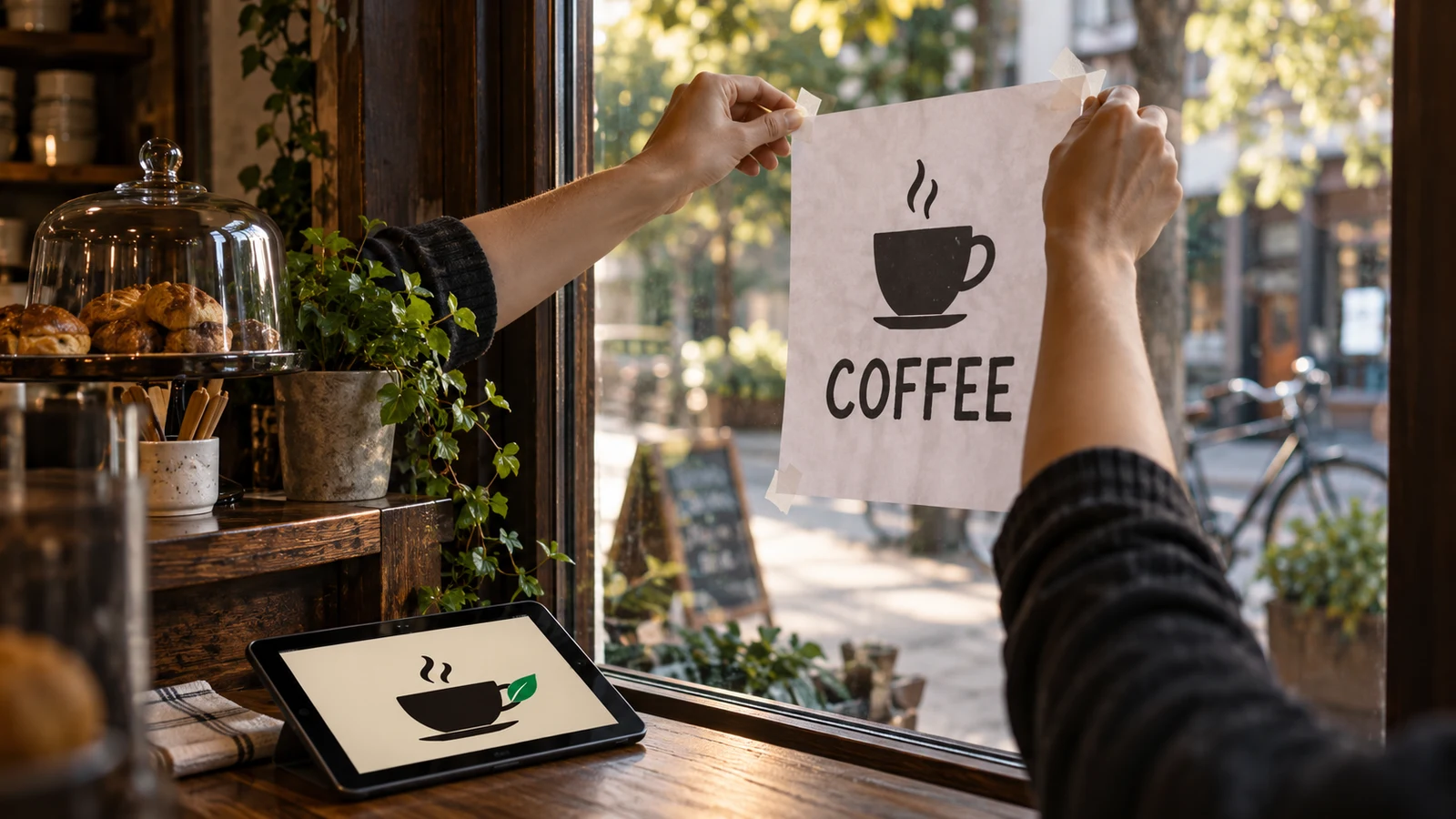
First it was the hands. Then it was the words. A convincing image, right up until you counted the fingers or tried to read the sign.
Those were easy reasons to dismiss AI image generation. They were also temporary problems to build your confidence around.
The tools have moved. OpenAI's March 2025 image release demonstrated readable text in things such as menus and signs. Its September 2026 release goes further into everyday work, with templates for flyers and product photos, and more targeted editing. Those are the maker's documented capabilities, with results that still need checking. OpenAI, March 2025; OpenAI, September 2026.
And I think the uncomfortable bit for designers is how ordinary the jobs are.
A picture for a Facebook ad. A poster for the window. Something to show a new product without the washing on the bench behind it. An owner doesn't need to settle the future of creativity before having a go at those.
The owner with the A4 poster
Before talented designers get defensive, think about the home-printed A4 posters you've seen. I've seen them in barbers, cafés and pet-grooming businesses. Someone needed to tell customers something, so they made a sign and put it up.
You can have an opinion about the typography. The owner still had a message to get out.
I don't look at every one of those posters and see a design commission waiting to happen. Some of that work was always going to be DIY. The useful question is what happens when the same person can make a much better attempt, without first learning a whole design application.
Present the thing better.
That is where this gets interesting for small businesses.
Start with a real product photo. Ask for a different background. Try another crop. Make room for a headline. Tools that can work from an uploaded reference and make targeted edits put more of that work within reach. Whether they preserve the product properly is something you still have to check. OpenAI’s September 2026 release.
You can present the thing better. Give it some space. Show the detail. Help someone understand what they're looking at.
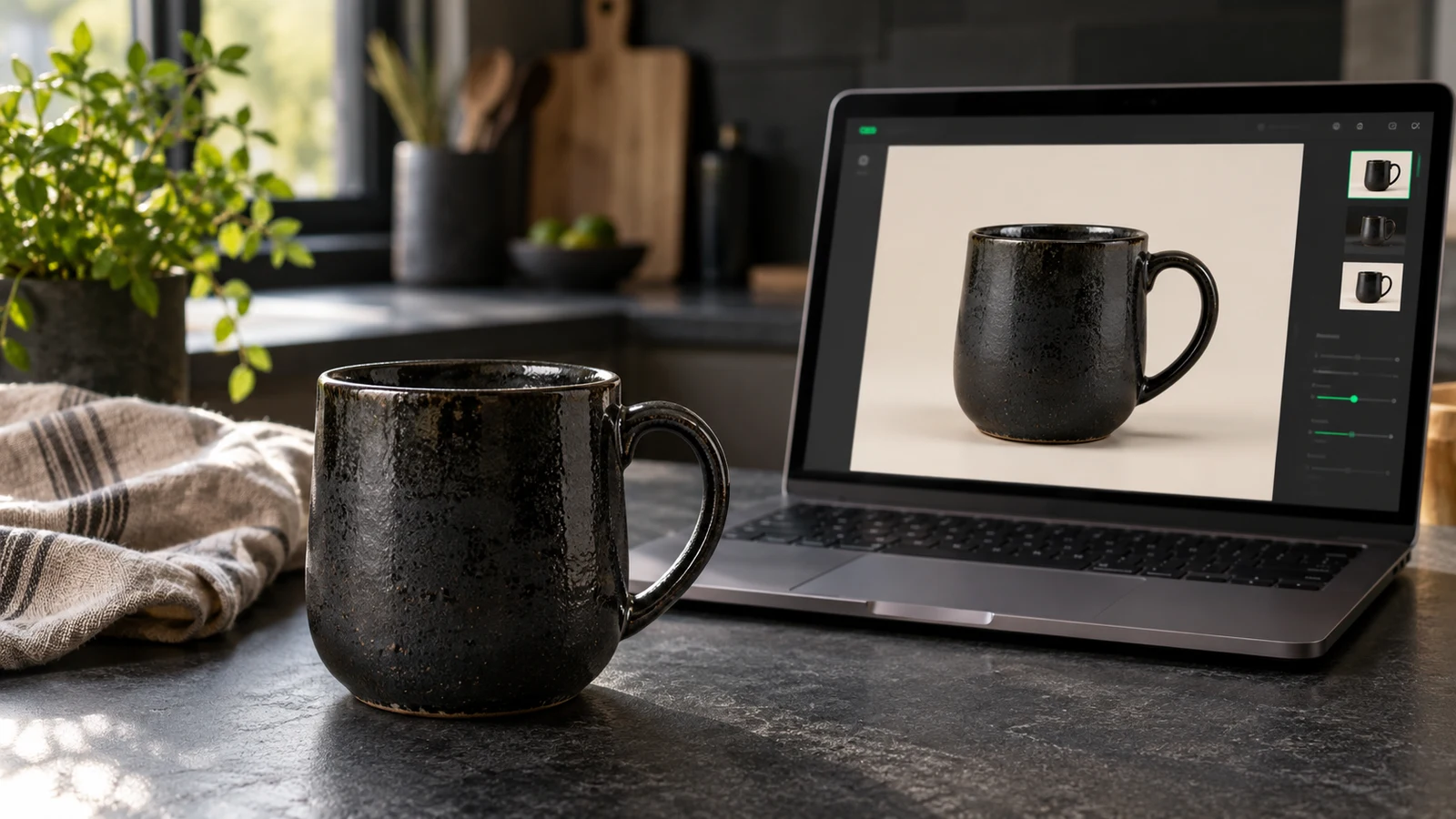
You also need to stop it quietly inventing a better product. If the picture adds a feature, changes the material or makes the portion bigger, fix it. The customer is buying what turns up. A beautiful lie is still a shit way to start that relationship.
My feed used to be full of cringe ads. Now there's cringe AI in there too. Better tools haven't automatically given everyone better judgement.
But I think it's a mistake to stop the conversation at how much of it looks bad. Someone who couldn't make the thing before can now attempt it, change it and publish it. A useful offer can get out of their head and in front of people. Graphic production becomes less of a reason to do nothing.
That doesn't guarantee an audience, an enquiry or a sale. It gives the owner a way to participate.
My bet is that more owners will do more of the routine work themselves. I think that puts real pressure on selling basic production as a specialist service. I haven't measured a collapse in the small-business design market, and I wouldn't pretend every owner is about to become their own designer. Some will want help. Some will have better things to do. Some will try it and decide they'd rather pay someone.
Make the professional choice worthwhile.
The professional's job is to make that choice worthwhile.
Knowing what to make matters. So does knowing what to leave out. A good designer can see why the headline is buried, why the offer is confusing, why the image is pulling attention away from the product, or why five individually decent posts look like five different businesses.
Those are decisions. Being able to explain and improve them is a stronger thing to sell than access to software the client finds intimidating.
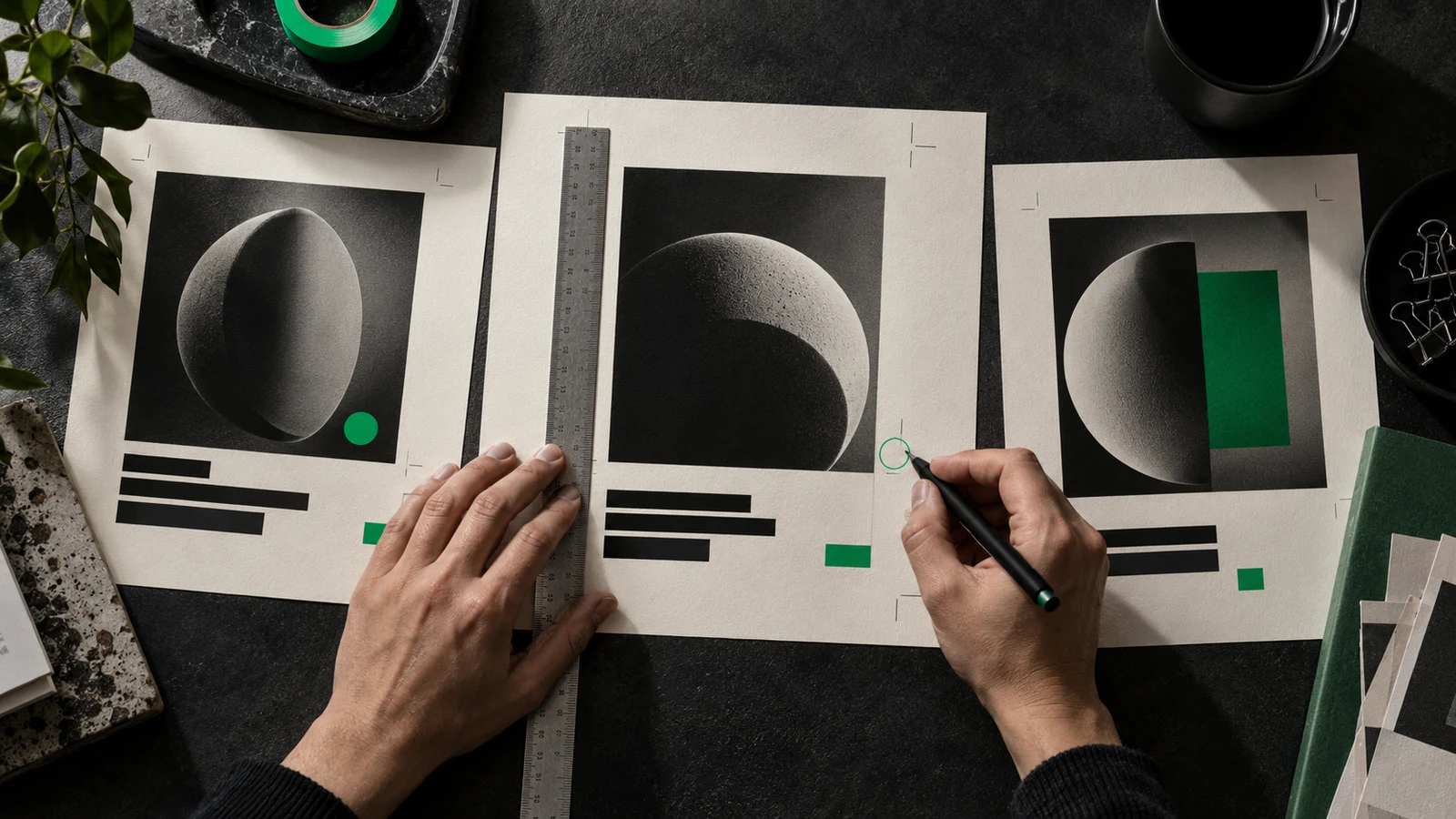
And there is still craft in making the finished thing hold up. Read the small print at the size someone will actually see it. Check the logo. Check every word, price and product detail. OpenAI's current image documentation still lists limitations around text clarity, recurring brand elements and precise layout. A good-looking thumbnail is a poor quality check. OpenAI image-generation documentation, checked 15 October 2026.
I want small businesses to have this capability. I want an owner with something useful to say to be able to get it out, even when a professional production job isn't on the cards.
I also want designers to take that seriously. Help the owner make a better decision. Build something they can keep using. Bring the idea, the taste and the care that makes the work worth paying for.
If your whole pitch depends on the client being unable to make a passable graphic without you, I'd be worried. The owner with the A4 poster has another option now.
Sources & image notes
- Introducing 4o Image Generation, OpenAI, March 2025.
- Introducing ChatGPT Images 2.5, OpenAI, 8 September 2026.
- Image generation: limitations, OpenAI API documentation.
The three editorial images are AI-generated illustrations. They do not depict actual client work. The audio uses AI narration.
The reel combines stock footage with illustrative mockups of AI-generated promotions on a phone, in a laptop editor and in a café window. Businesses, offers and prices in the mockups are fictional.
Footage via Pexels: ArtHouse Studio, Jakub Zerdzicki, KoolShooters, Daven Hsu, PNW Production, cottonbro studio (laptop), cottonbro studio (print review), Pixel Dots, SHVETS production, Ron Lach and Kaboompics.