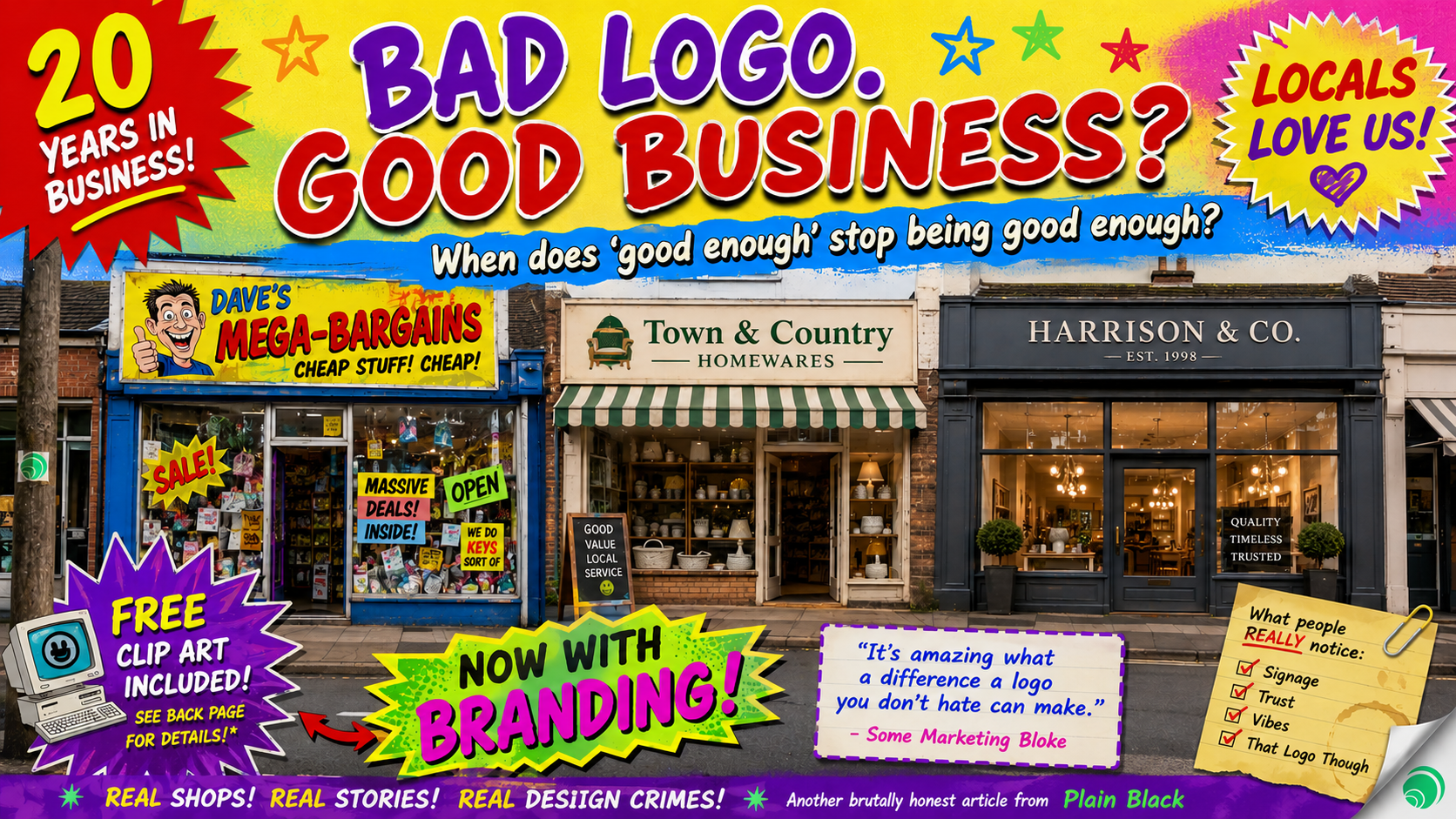
I walked past a local Devonport shopping region today and looked at the shopfronts. Some of the branding was rough. Not charming-local-character rough. More like someone found clip art in 1998 and the printer was already smoking.
And yet some of these places have been trading for years. Which raises an awkward question for people who do this for a living: if the branding is that bad and the business is still alive, how much does branding actually matter?
The honest answer is annoying. Less than branding people pretend. More than business owners sometimes realise.
A good logo won't save a bad business
A clever colour palette won't make people want a product they don't want. A perfectly spaced wordmark won't fix rude service, confusing pricing, bad coffee, or a website that reads like it was written by a hostage with a thesaurus.
So no, branding is not magic. Anyone who tells you a rebrand alone will turn the business around is selling you a linen blazer and a deck full of feelings.
But bad branding is not harmless either. It taxes the business quietly. It makes people hesitate. It makes the offer look cheaper than it is. It attracts the wrong customers and makes a premium price feel suspicious. It can make a genuinely good operator look like they're winging it.
Some businesses survive rough branding because everything else carries it. Great location. A product people already know they want. A known owner. Loyal locals. Word of mouth. A low-risk, simple purchase.
The old fish and chip shop can get away with a dodgy logo, because everyone already knows exactly what they're buying. The risk is low and the decision is fast.
The real question is not whether the logo is pretty
That is where most branding conversations go to die. Do you like it? is the wrong question, because liking it is a matter of taste and taste doesn't pay the rent.
The better question is this: does the first impression match the level of trust the business is asking for?
If you're cheap, familiar, obvious, and local, rough branding might not hurt you much. But change one variable and the maths changes fast. A builder asking for a large renovation deposit is asking a stranger to hand over serious money before a single brick moves. A cosmetic clinic is asking someone to trust their face to you. A consultant is asking a business to trust their decisions to you.
In those situations, looking like clip art with a lease becomes a real problem. Not because designers need everything to be beautiful. Because customers decide quickly and they notice.
When does good enough stop being good enough
Most people won't use the word brand. They won't write you an email explaining that your shopfront undermined your premium positioning. They just feel something is off, and they walk past. You never find out the enquiry you didn't get.
That's the cost that doesn't show up anywhere. There's no line in the accounts for the better customer who hesitated and chose the competitor who looked the part.
So the question for a small business owner isn't is my logo nice. It's whether the first impression is doing the job the business needs it to do. If you're trying to charge more, win a different kind of customer, or get someone to trust you with a high-risk purchase, good enough often isn't.
The businesses that survived rough branding for years usually did it because something else was strong enough to drag the brand along behind it. The dangerous question is how many good operators are quietly losing better customers because the first impression is selling them short.