Here's the uncomfortable truth: most small business marketing isn't broken because of lack of effort. It's broken because no one ever taught you what actually works.
After years of working with businesses across AU, NZ, and the US, I've seen the same three mistakes show up so consistently that I can spot them within five minutes of looking at someone's marketing. Not because business owners are incompetent. Because the advice floating around out there is either too vague to execute or completely disconnected from reality.
Let's fix that.
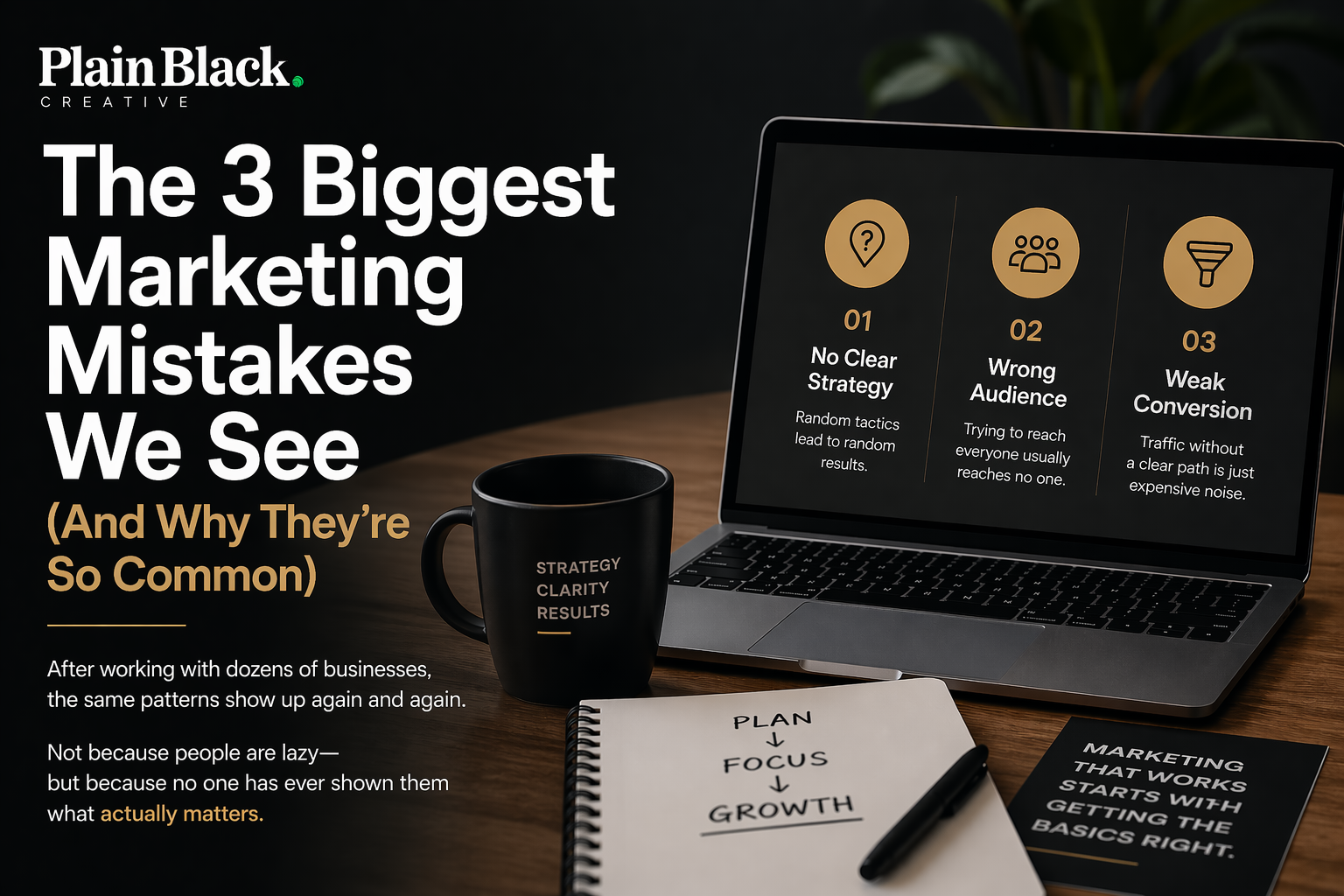
Mistake #1: No Clear Strategy (Just a Random Collection of Tactics)
You're posting on Instagram because someone said you should. Running Google Ads because a consultant recommended it. Sending occasional emails because you read it works. Meanwhile, none of it connects to anything else.
This isn't marketing. It's expensive noise.
A strategy answers three questions: Who are you talking to? What do you want them to do? How will you get them there? If you can't answer all three in one sentence, you don't have a strategy. You have hope dressed up as activity.
Real strategy is boring. It's a Google Doc that says exactly who you're targeting, what message hits them hardest, and which two channels you'll actually commit to. That's it.
The reason this mistake is so common? Strategy feels like overhead. It's easier to jump straight into doing something than to sit down and figure out what the something should be. But tactics without strategy is just burning money with better lighting.
Mistake #2: Poor Targeting and Audience Understanding
You think you know your audience. You're probably wrong.
Most businesses describe their target market in terms so broad they're meaningless. "Small business owners." "People who care about quality." "Anyone who needs our service." Cool. That's everyone and no one.
Here's what actually matters: what keeps your best customers awake at 2am? What did they try before you that didn't work? What specific words do they use when they describe their problem?
If you don't know the answers, your targeting is guesswork. And guesswork doesn't scale.
The Real Issue
You're selling to a version of your customer that exists only in your head. Meanwhile, the actual human with the credit card is three steps to the left of where you're aiming.
This mistake persists because deep audience research feels like procrastination. It's not flashy. It doesn't look like marketing. But I promise you, 10 hours spent talking to your best customers will do more for your business than 100 hours of content creation aimed at ghosts.
Mistake #3: No Clear Conversion Path
Someone lands on your website. Now what?
If the answer is "hopefully they figure it out," you've already lost. Every piece of marketing you create should have exactly one job: move someone to the next step. Not three steps. Not "build awareness." One step.
See an ad, click to a landing page. Read the landing page, book a call. Finish the call, get a proposal. Read the proposal, sign the contract. Each step is clear, frictionless, and impossible to misunderstand.
Most businesses I work with have conversion paths that look like a maze designed by someone who hates customers. Five different CTAs on one page. No clarity on what happens after you click. Forms that ask for your life story before you've even decided if you're interested.
Your conversion path should be so obvious that a distracted person scrolling on their phone at a red light can follow it. If it requires focus, it's too complex.
Why is this so common? Because businesses confuse options with value. They think giving people more choices is helpful. It's not. It's paralyzing. One clear path beats ten mediocre options every single time.
Why These Mistakes Keep Happening
It's not lack of effort. It's lack of clarity.
The marketing advice online is either surface-level garbage or academic theory that doesn't translate to real businesses. No one is sitting down with small business owners and saying, "Here's exactly what to do, in what order, with what you actually have."
That's what PlainBlack exists to fix. Not vague principles. Not theory. Actual playbooks that tell you what to build, what to say, and where to put it.
If you're tired of guessing, check out the Marketing Playbook in the sidebar. It's the strategy document you should have built six months ago, handed to you ready to execute.
No fluff. No filler. Just the plan.